

Keep Calm and Carry On—Mercury in Libra—September 22nd—October 10th.
 So often we hit a wall. Collide with an immovable force that profoundly alters the trajectory of our life: the accident, the lawyer’s letter, the termination of our employment, the conversation with our doctor that leaves us hemorrhaging hope. Physicist Stephen Hawking who was diagnosed with motor neurone disease in his twenties once told the New York Times, “my expectations were reduced to zero when I was twenty-one. Everything since then has been a bonus.”
Mercury races ahead of the Sun into Libra on September 22nd. On crossing the threshold, both planets square Saturn, honing our ability for practical, disciplined thinking about serious concerns. Saturn/Mercury transits can marry our minds to pessimism, steal the fleeting moments of joy that inhabit the silent spaces of our lives. As Mercury travels through Libra, we have an opportunity to cultivate a deeper awareness of our mental chatter and the worrisome thoughts that may stir our feelings. We have an opportunity to look for the bonuses.
The Moon is Full at 2 degrees Aries on September 24th. She’s conjunct Chiron, square Saturn, opposing Mercury and of course, the Libran Sun. The essence of Aries is our individual will. The signature of this lunation is the opportunity, the right moment to step over the threshold, release a thought, a habitual response, a behaviour, so that the river of our life may flow easily once more. Saturn is associated with time, (Chronos) and Chiron transits correspond with major turning points, opportunities to awaken, to re-balance, to align with our deepest, truest nature. Chiron will move back into Pisces on September 25th, and will remain there until February 18th. Chiron is also associated with an experience of deep woundedness, in our life situation, our physical body, in the way we perceive the world. This Full Moon may correspond with a new insight that accelerates our growth, fortifies our resilience.
Keep Calm and Carry On was the British Government’s attempt to console the public who faced invasion at the onset of WW II. As the epicenters of civilization shudder across the globe, as America and Britain face their “Darkest Hour”, it will be the small gestures of love and kindness, the careful harnessing of our untamed thoughts, that keep us calm, help us carry on amidst the gathering storm of collective angst.

“Be glad. Be good. Be brave,” wrote Eleanor Emily Hodgman Porter in her best-selling novel, Pollyanna. The year was 1913. This simple statement resonated in the matrix of the Collective Consciousness as the dark war clouds blotted the sun over the Balkans and thousands of young men were soon to drown in their own life-blood in the rat-infested trenches of World War I. One hundred and five years later, we continue to enlist in our private battles for survival—financially, emotionally, or spiritually. When everything around us seems to be falling apart, this steadfast statement bids us first and foremost, to be grateful. To conduct our lives with integrity and valour. The fortitude and unwavering optimism of eleven-year-old Pollyanna offered the comfort of hot-buttered toast and a cup of sweet tea at a point of impact in western civilization when there was no going back. When to be glad, good, and brave, was one constant beacon amidst cataclysmic change.

Our evolutionary challenge this month is inner serenity and a selective, deliberate focus on those things that are right in the world and in our relationships. Lévy-Bruhl and, later, Jung, wrote of the Participation Mystique. That mystical participation that can manifest in situations and material things in our lives. That sense of wonder and magic that is inherent in small children and has been codified as The Law of Attraction. We are required to “always look on the bright side of life” as we bravely embrace the contradictions, the baffling complexity, and buckle up for those roller coaster rides that leave us whip-lashed, aching and bruised. Melody Beattie believes, “Gratitude unlocks the fullness of life. It turns what we have into enough, and more. It turns denial into acceptance, chaos to order, confusion to clarity.”
Happiness, and her twin sister, Joy, dance in Gratitude, in the “little things that are the hinges of the universe” according to newspaper columnist and novelist, Fanny Fern. Gratitude is a spoonful of sugar to crankiness. Gratitude is like a garden. It requires careful tending if we want it to flourish. It may require gentle coaxing back into bloom after a storm or the cruel crush of frost. It certainly takes a good sprinkling of imagination and a stir of magic to feel it sometimes, and yet like the fairies that sit on our garden wall and fly about our heads as we water the rose bushes, it is always there if we look. If we believe.
Gratitude, like Love, is a choice. It’s an inside job. If we feel like Cinderella, no pumpkin carriage, no diamond tiara, glass slipper, or handsome Prince will make us authentically, radiantly happy. If we play the Glad Game, and cheat because we don’t truly believe, we can’t evoke the magic. We cannot fake it ’til we make it. We cannot buy, Botox, or bargain our way to Gratitude and contentment. We cannot pretend to be Little Miss Sunshine if we feel like The Snow Queen.
Gratitude must become habitual for the magic to work.
So, observe those wild geese that fly with the moon on their wings. Give thanks that the silver white winters will melt into springs … And hold steady in these challenging times. Encourage ourselves and each other to keep moving, keep focused, as new life emerges from the dead leaves of change.
I post regular astrology updates on FaceBook: https://www.facebook.com/ingrid.hoffman.75
Please contact me directly for private readings and for more information about forthcoming workshops—ingrid@trueheartwork.com

 The little things? The little moments? They aren’t little—Jon Kabat-Zinn.
 The
The  For those of us who carry the imprint of the Virgo archetype in our birth chart, we will inevitably encounter the duality, the complexity, the tension, associated with the Earth Angel, weighted with the detailed task of seeding the potential in every idea, every action; the never ending task of trying to create order out of chaos.
 e encounter the Prostitute Archetype, in our own lives, and in the corridors of power. This month, we may contemplate how easily we can be bought, bargained for. We might ask ourselves, where do we negotiate our power, trade our gifts and talents, when our survival is at stake?
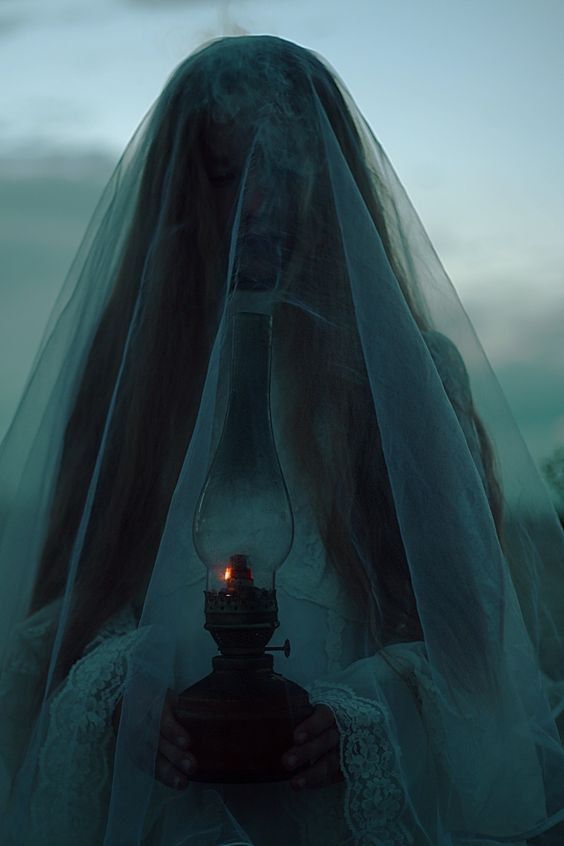
 Virgo is also associated with the Alchemist, the Sisters of Mercy, the Wise Virgin who tends her oil lamp with due diligence. She’s Vasilisa, the Beautiful who separates the poppy seeds and corn from the soil. She is aligned with The Hermit IX in the Tarot and the anchorite who holds the lamp of inner guidance as we prepare for a major change in our life direction.
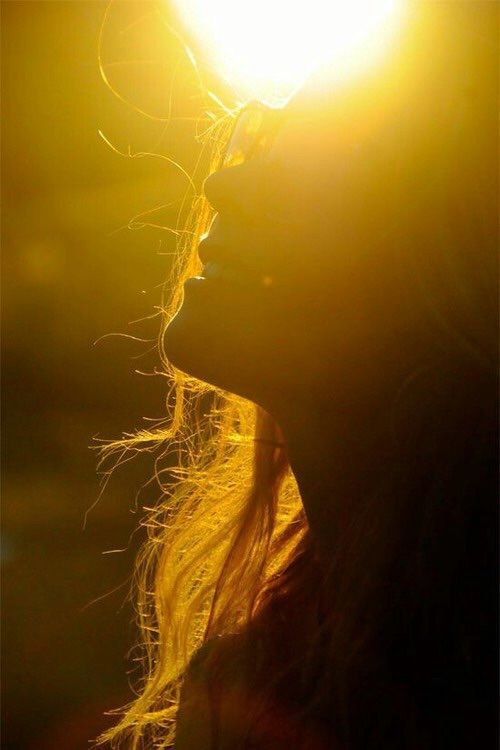
 This is the Solstice, the still point of the Sun, its cusp and midnight, the year’s threshold and unlocking, where the past lets go of and becomes the future. The place of caught breath—Margaret Atwood.
 Frank Baum’s “There’s no place like home,” and the clichéd “Home Sweet Home,” reflect our heart’s longing for safety and belonging as we pause in the dreamy haze of mid-summer heat, or close the curtains against the raw chill of mid-winter. As Uranus moves through Taurus, one of the manifestations will be the issue of land and affordable housing—a place to call Home.
 I post astrology updates regularly on Facebook, and offer private readings on Skype or in person, so do please connect with me, I’d love to hear from you—ingrid@trueheartwork.com
 Something old, something new, something borrowed, something blue, and a silver sixpence in her shoe…


 Some of us may realise that the harshness and discord in the world reflects our own internal state. That the rocks and thorns are on the pathways of our internal landscape. Some of us may know that there are no heroes who can save us from ourselves. That our quest as women, is not to attempt a hero’s journey, to try to be pseudo-men. That modern heroines require a skill set that pays the mortgage and the school fees.

 This Valentine’s Day, millions of people will demonstrate through chocolates, music and flowers, their longing to love and be loved. “Perhaps it is true that we do not really exist until there is someone there to see us existing, we cannot properly speak until there is someone who can understand what we are saying in essence, we are not wholly alive until we are loved”, writes author Alain de Botton.
 The archetype of Saturn is redolent of prisons. Pluto is accompanied by a primal, shadowy fear that’s hard-wired in every living creature. Pluto is life and death. Pluto is survival. Tapping into the core scene of the Saturn/Pluto energy of this time, Hard Sun, the pre-apocalyptic BBC drama, depicts a world that faces certain destruction in five years. It’s a prophetic vision of love and survival that resonates with the zeitgeist of Pluto in Saturn’s sign.


 If you want to fly, you have to give up the things that weigh you down—Toni Morrison
 For many of us this year, we will have to bow our heads to the necessity of getting out of bed each day and finding something to be truly grateful for. We will yoke ourselves to the inevitability of change: children who leave home, a lover who no longer loves us, a dear friend who moves far away, a beloved parent who now needs the same vigilant caring as a toddler. As we eat of the bitter herb, may we know that there is milk and honey also, in the acceptance of things as they are.
 Ananke is an ancient goddess, and the resonance of her name has its tap root in the ancient tongues of the Chaldean, Egyptian, the Hebrew, for “narrow,” “throat”, “strangle” and the cruel yokes that were fastened around the necks of captives. Ananke always takes us by the throat, imprisons, enslaves, and stops us in our tracks, for a while. There is no escape. She is unyielding, and it is we who must excavate from the depths of our being, our courage, tenacity, and acceptance of what is.
 “One can never have enough socks,” said Dumbledore. “ Another Christmas has come and gone, and I didn’t get a single pair. People will insist on giving me books” ―J. K Rowling.


 Mercury harmonises its energy with Saturn (November 28th December 9th and again from January 11th 15th) and as this calendar year hurries to an end, we may feel a sense of moving through treacle, sucked down by obstacles when everything around us is moving so fast. As Saturn and Mercury, hang low in the molten evening skies, there’s a deeper message contained here, said so simply by the Buddhist monk, Haemin Sunim: When everything around me is moving so fast, I stop and ask, “is it the world that’s busy, or is it my mind?”
 Today, let’s bring new vision, self-reflection, and healing to our thoughts and to the words we speak. Today, let’s be mindful that we do have a choice to re-write our signature, clearly and simply.
 The weeks before Christmas deliver an avalanche of excess and indulgence. The Sun in exuberant Sagittarius this month escorts Merry into the days preceding the winter solstice.

 So let’s go gently as the weeks gather momentum for the crescendo of the solstice on December 21st. Amidst the Christmas carols that loop repetitively from sound systems in shopping malls and supermarkets, the frenetic hurrying to buy what we think our loved ones want. The strenuous exertion, the anticipation, the planning, the doing. Let’s be tender and kind to our weary bodies. In the flurry to buy food, gifts, stocking fillers, ask yourself today what is it I truly need now? Amidst the bright babble of the office party, the fairy lights of the crowded malls, amidst the heated rush of hurry, re-claim a few moments of sumptuous silence in the gap between the in-breath and the out-breath.
 Sagittarius is associated with the Quest for Vision, the Journey not the Destination, the Search for Meaning. We may never find any of the answers in this human life time, but we are ready to stretch and grow into all possibilities. Sagittarius is associated with long distance travel where we may encounter tastes and smells and rich new experiences, where we meet people who challenge our conditioning, free our minds, break away from boring routine. In Sagittarius we look up. And we’re amazed.