

Sun in Libra September 23rd
 “Be glad. Be good. Be brave,” wrote Eleanor Emily Hodgman Porter in her best-selling novel, Pollyanna. The year was 1913. This simple statement resonated in the matrix of the Collective Consciousness as the dark war clouds blotted the sun over the Balkans and young men were soon to drown in their blood in the trenches of World War 1. Ninety-nine years later, we continue to enlist in our private battles for survival—financially, emotionally, or spiritually. When everything around us seems to be falling apart, this steadfast statement bids us first and foremost, to be grateful. To conduct our lives with integrity and valour. The fortitude and unwavering optimism of eleven-year-old Pollyanna offered the comfort of hot-buttered toast and a cup of sweet tea at a point of impact in western civilization when there was no going back. When to be glad, good, and brave, was one constant beacon amidst cataclysmic change.
So often we hit a wall. Collide with an immovable force that profoundly alters the trajectory of our life: the accident, the lawyer’s letter, the termination of our employment, the conversation with our doctor that leaves us hemorrhaging hope. We stand at the door unopened. We tremble; we know with every fibre of our being that there will be no going back. When we cross this threshold, this crossing will reverberate across future decades of our lives – and the lives of those we love so fiercely. When we take those fateful steps, we feel in the deep silence of our heart, that we have to choose: to be angry, bitter, desperately powerless to change or control what has gone before. Physicist Stephen Hawking who was diagnosed with motor neurone disease in his twenties believes. He once told the New York Times, “my expectations were reduced to zero when I was twenty-one. Everything since then has been a bonus.”
 The Sun moves into the sign of Libra on September 23rd, marking the Autumn or the Spring Equinox. The turning of the Great Wheel of the Year. The Scales of Balance are poised. Compromise or polarisation. Quiet desperation or the grace to remember that this is precisely what we have come here to do. In scales of Libra we hold the tension of opposites. Light and shadow. The paradox of our humanness in the eye of the storm.
 Richard Tarnas, author of Cosmos and Psyche, writes, “Our time is pervaded by a great paradox. On the one hand, we see signs of an unprecedented level of engaged global awareness, moral sensitivity to the human and non-human community, psychological self-awareness, and spiritually informed philosophical pluralism. On the other hand, we confront the most critical, and in some respects catastrophic, state of the Earth in human history. Both these conditions have emerged directly from the modern age, whose light and shadow consequences now affect every part of the planet.”
 Pollyanna is a virtuoso at making deliciously sweet lemonade from the tart lemons in her life. She adroitly gathers comfort and joy from the shards of pain and misfortune. And she is skilled at playing The Glad Game. The rules are simple: find something to be glad about in every circumstance of your life. She’s a waltzing in the moonlight Libran as she gazes about her, finding beauty in the world she sees.
Our evolutionary challenge this month is inner serenity and a selective, deliberate focus on those things that are right in the world and in our relationships. Lévy-Bruhl and, later, Jung, wrote of the Participation Mystique. That mystical participation that can manifest in situations and material things in our lives. That sense of wonder and magic that is inherent in small children and has been codified as The Law of Attraction. We are required to “always look on the bright side of life” as we bravely embrace the contradictions, the baffling complexity, and buckle up for those roller coaster rides that leave us whip-lashed, aching and bruised.
Happiness, and her twin sister, Joy, dance in Gratitude, in the “little things that are the hinges of the universe” according to newspaper columnist and novelist, Fanny Fern. Gratitude is a spoonful of sugar to crankiness. Gratitude is like a garden. It requires careful tending if we want it to flourish. It may require gentle coaxing back into bloom after a storm or the cruel crush of frost. It certainly takes a good sprinkling of imagination and a stir of magic to feel it sometimes, and yet like the fairies that sit on our garden wall and fly about our heads as we water the rose bushes, it is always there if we look. If we believe.
Melody Beattie believes,“Gratitude unlocks the fullness of life. It turns what we have into enough, and more. It turns denial into acceptance, chaos to order, confusion to clarity.”
Gratitude, like Love, is a choice. It’s an inside job. If we feel like Cinderella, no pumpkin carriage, no diamond tiara, glass slipper, or handsome Prince will make us authentically, radiantly happy. If we play the Glad Game, and cheat because we don’t truly believe, we can’t evoke the magic. We cannot fake it ’til we make it. We cannot buy, Botox, or bargain our way to Gratitude and contentment. We cannot pretend to be Little Miss Sunshine if we feel like The Snow Queen.
Gratitude must become habitual for the magic to work.
So, observe those wild geese that fly with the moon on their wings. Give thanks that the silver white winters will melt into springs … And hold steady in these challenging times. Encourage ourselves and each other to keep moving, keep focused, as new life emerges from the dead leaves of change. 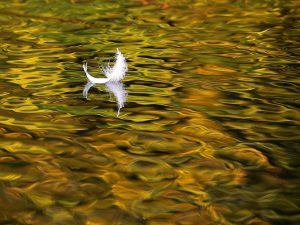

 This month (September 28th, 2017) is the last of the three Uranus-Jupiter oppositions (26th December 2016 and 2nd March 2017) and Eris protests angrily.
 As “the wrath of nature” pounds America’s coastline, the alignment of planets in Virgo and Neptune and Chiron in compassionate Pisces, suggest there will be a healing in this ferocious release of energy—generosity of spirit, heartfelt outpouring of love and empathy, and practical measures to bring relief to the people and animals swept up in this catastrophe.
 If we use the potent archetypes of Eris, Uranus and Jupiter to expand our awareness; to do our mindful bit for each other and the planet, perhaps only then we will know that we are all part of the Whole. We’re all in this together. The birds, the bees, the great leviathans, the polar bears
 a neat life. As if Love is a play-thing, to put aside when we tire of it, or it becomes too big and boisterous. We window-shop for Love on dating sites. Foolishly mistake Love for Sex. Balk at provocative choices. Terrified we may expose our soft-bellied vulnerability, we manacle ourselves with the cold steel fear of rejection, memories of past betrayals, disappointments. We play it safe, never daring to throw the dice lest we score too high for comfort.

 “All grown-ups were once children… but only few of them remember it,” wrote Antoine de Saint-Exupery. Feeling good about ourselves despite our age, the girth of our waist, the wrinkles on our skin and owning the right to be joy-filled, whether we’re single or coupled, is something the self-help movement has focused upon for several decades now. But for most of us in work-addicted societies, play and pleasure are something we do by proxy. We fall into a trance of forgetfulness, our butterfly joy caught in the heavy net of seriousness and grown-up responsibility. In the busyness of living out the days and the months and the years we somehow become reactive rather than reflective to the myriad pleasures that life offers.
 The ageing Dr Christiane Northrup’s offering, despite its trite and erroneous title,
  Saturn’s journey through this mutable fire sign is epitomised by the image of flame and heat.
 Alice Phoebe Lou –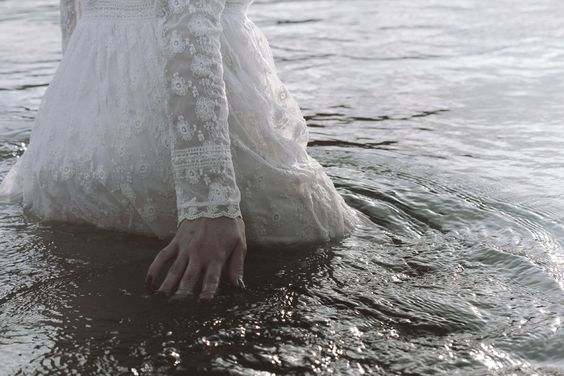


 Most of us avoid choices because we fear taking charge of our own lives. We resist surrendering our will to a Higher Level of Consciousness. We balk at the effort it takes to change our perception. We use powder puff words that cover our intentions with rapturous excuses. Or we let flutter, spent, to the ground like autumn leaves: “I’ll try to”. “I promise” ….
 The choices we make from our hearts and souls are Grace. Events that seem unjust and incomprehensible may be Divine Intervention that we can only appreciate in hindsight when we have unwillingly unclasped the old and opened our hearts to the new. And when we accept the consequences of our choosing, we begin to move again, one step at a time.

 There are two kinds of people in this world: Winners and losers. This belief is celebrated in song and movies, entrenched in education and sport, set in the cement of corporate temples to Mammon. Dream big, reach for the stars, you can have it all, because, dammit, “you’re worth it!” This sense of entitlement, this determination to be worthy, might be a warm poultice on the inflammation of our unworthiness.
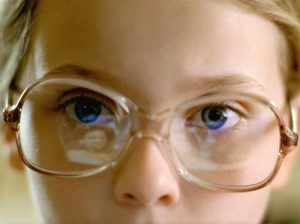 For some, the race to “get ahead”, to set higher “bench marks” has become utterly meaningless. Some may be in the right place at the right time. Their moment of glory will be encoded in the birth chart as they elatedly clasp the Oscar; proudly stand on the winner’s podium. Success—or “failure”—may be predetermined by a sacred soul contract—a Divine Plan.
 In societies where individualism and equality are valued and encouraged we may believe we alone are responsible for every aspect of our lives—our successes and our failures. We concoct our very own recipe for our happiness. Our ancestors could rail against misfortune, or the gods, or the circumstance of their birth. Today, self-made men and women sail solo. When we slam against the dark reef we cannot blame the gods, our parents, our ex-lover, or the government for our choices and perceptions. So, we perform the blood-letting when our scapegoated heroes fall from grace, baying like frenzied hounds at their blunders, their stupidity.
 Life is simple in the fast lane. Or is it? Success will be yours, if you work hard, have the right attitude, pointed focus, if your character and integrity are “good enough”. In the 1920s Bertrand Russell asked, “what will be the good of the conquest of leisure and health, if no one remembers how to use them?” His question is still pertinent today. I have a friend who works within the honeycomb cells of a large corporation. She sprinkles her sentences with hollow phrases that encompass our cultural comprehension of success: products, like people, must be “relevant”. By unspoken implication, if we are not “relevant” we are obsolete. Disposable. Like tooth brushes, celebrity marriages and old people.
 Sometimes it is a dispassionate Collective Fate that steps in to decimate our lives – the savagery of a bombing, the watery obliteration of a tsunami, a deadly sheath of blistering flame. Sometimes it is a private tragedy that rips the windows and blows the roof off our reality. We may resume our striving unaltered, unshaken, defenses nailed back in place, just as they were before. Or we may painstakingly sift through the broken foundations of our hopes and dreams and find that nothing is and will ever be the same again. Our values, priorities, longings now sound forth in a quieter song. Perhaps then we may lift up the oars. Allow ourselves to be carried towards the jetty, accepting things are as they are, for now. We may smile, because we sense that this life is but a dream. In this part of the dream we can put down our bow, pack away our arrows, success no longer our quarry. Row, row, row your boat, gently down the stream. Merrily, merrily, merrily, merrily, life is but a dream.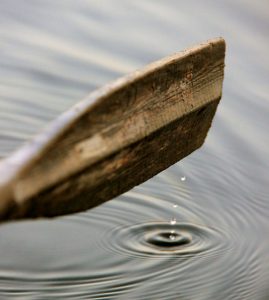
 In real life, our lipstick comes off when we kiss our lover goodbye. In real life, our noses run and our mascara meanders darkly down our cheeks when the people we love with all our hearts die too soon. In real life, there will be times when we stand alone at the threshold, not sure of who we are or who we are about to become.
 Demographics and photo-shopped aspirational women’s magazines aside, New Alpha Goddesses were rare in our blood-soaked human his-story—there was no room for a brand-new breed of Alpha Goddesses on Mount Olympus. Despite the sacrifices of The Suffragettes of the 19th and early 20th century and the courage of the Feminists of the ’60s, between the shadows of our politically correct social constructs there exists today the very same polarisation in gender and power that has existed for eons. In affluent societies, many women in midlife and in their elder years live in straightened circumstances after divorce or the death of their spouses. Women still do not, in the main, earn as much as their male counterparts. Women still bear, birth, and nurture the children. Each one of us will have thresholds to cross. Yet not all of us will have the luxury of time or sufficient financial security to say, “it’s my turn” as we support our children through their college years, nurse our dying parents, care for partners whose once virile bodies are failing. Perhaps we might discover that we don’t have the physical strength, the financial clout, the confidence, or even the inclination to be an New Alpha Goddess. Perhaps we might discover that we’ve
 never wanted to travel solo or drive a fast car and that being just who we are is enough for now.
 Doesn’t everything die at last, and too soon?
 Plato said that Love is a kind of madness. I imagine he was describing the heated arc of light that wraps its comet’s tail around our heart when we tumble into Love. That ferocious Love that ambushes us, unbuttons and unbolts us, throws us on the floor. It’s in a Love like this that we drink from the elixir of youth. It’s in a Love like this that we are re-birthed in the font of forgetfulness, swaddled in the white robes of Hope. It’s in a Love like this we become adolescents, young and energetic again, despite our age. It’s in Plato’s kind of Love, that we’re radiant, filled with the sweet green sap of confidence. Utterly mad.
 Our Love relationships may require periods of spaciousness, solitude, emotional or physical distance. They may demand acceptance of the aberrations, a baring of warts and all kinds of foul-smelling bits. Our relationship may end in literal form and yet continue in our dreams, in the fragments of memory that float like dust motes across the lyrics of a song.
 There’s a nobility in loving despite fortune and circumstance. It takes courage to reclaim disowned feelings, modify behaviours that wound and flay. It takes courage to revision our own life and take back the projections so easily screened onto someone else’s life—“she has too many issues”, “he cannot do emotions”, or the classic cop out—I’m not “in love with him anymore”. Love is a paradox, a labyrinth where we may meet the Beast in the centre.
 Robert Frost wrote in his glorious poem “the best way out is always through…” And, as we prepare to engage our energies for the long haul, as we clear away the thorny brambles that obstruct our path, our hands will bleed and we may thirst for something sweeter, cooler, easier. Our impatience will be tested. We will become discouraged and disheartened. And yet, when we stop looking for the epiphany, we may feel that with each new day, with each new awakening, with each new stumble, we are moving a little closer.
 When we fall into Love, we fall into the imagination. Modern psychology echoes this belief and scientific research now “proves” that our nervous systems are not self-contained.
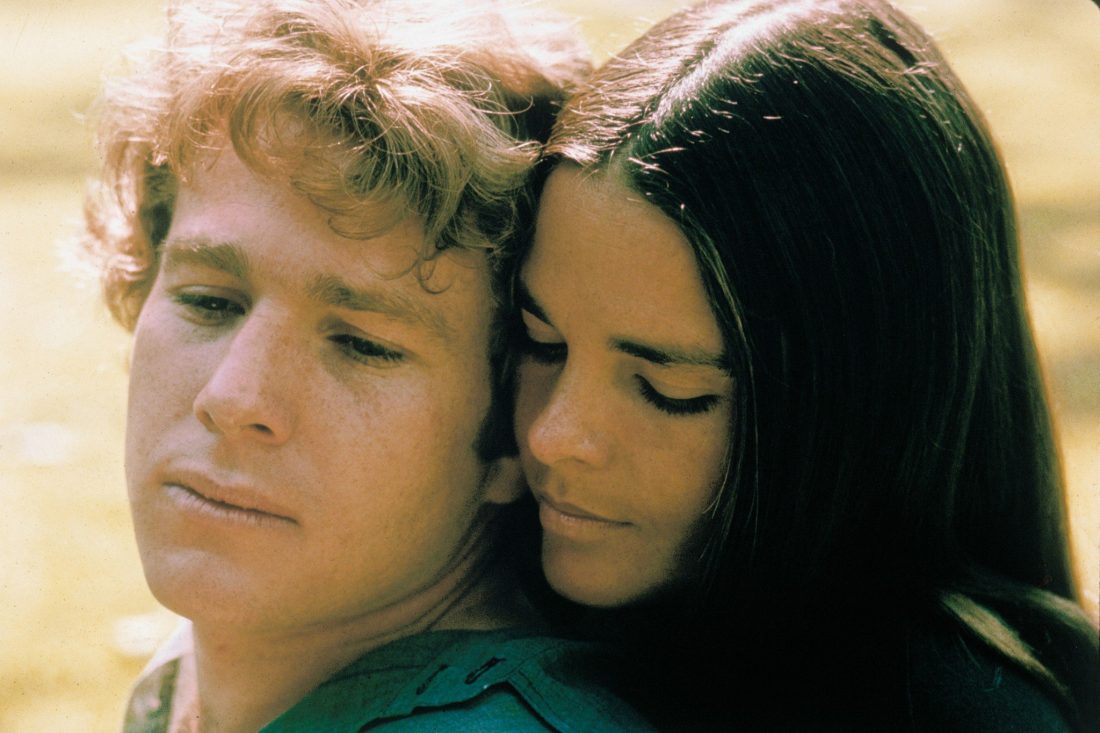
 Today we casually or consciously un-couple. Today our friends have benefits and Tinder is our one-stop 24-7, pocket-sized convenience store for regret-free hook-ups with just one swipe. Ours is a Supernova Consumer Culture where our Perfectmatch.com relationships have short sell-by dates.
 Pluto’s transit through Leo between 1937-1958 produced the narcissistic “Me Generation” and as each new generation pushes against the ignorance and excesses of the previous one. The Divine Child (or spoilt brat) rebelled against his staid Cancerian Parents. This is the generation that has destroyed vast tracts of pristine forest and coastline to erect golf courses and holiday resorts or set off to “find themselves”. This is the generation of the hedonistic “Rock Star” and the individual who spends years lying on the therapist’s couch talking about his unhappy childhood. This is the generation obsessed with staying forever young. This is the generation that divorces because they deserve to be happy! Baby Boomer, and author of the bestselling, Something More, Sarah Ban Breathnach says it all: “Do I deserve to be happy? Damn right I do. Am I ever going to be unhappy again? Not if I can help it.” … now you can reshape, reclaim and recreate the world in our own image.”
 Divorce is The Boomers’ legacy. And even in mid and late life this star-dust golden generation makes it up as they go along.
 y opt for a LAT arrangement – Living Alone Together – with partners they may despise at worse or tolerate at best.

 I met an old lady once, almost a hundred years old, and she told me, there are only two questions that human beings have ever fought over, all through history. How much do you love me? And Who’s in charge―Elizabeth Gilbert

 “We always marry someone with the purpose of finishing our childhood,” says psychologist Harville Hendrix. And we’re unconsciously drawn to people who will guarantee a re-enactment of the old, familiar relationship dynamics we grew up with.

 Mercury’s Retrograde cycle is an opportunity to be honest with our selves about our style of relating, the part we play in polluting our relationship space. So, how do we conceal our own vulnerability behind the cement wall of intractable beliefs about our partner? How do we own our wants and desires? How do we listen? How do we set boundaries and assert ourselves? How do we back off generously? How do we embrace and accept the relationship we have? How do we actively champion our partner and our relationship?
 “Every thought you produce, anything you say, any action you do, it bears your signature”, says Thich Nhat Hanh. Today, let’s bring new vision, self-reflection and healing to our words. Today, we have a choice to re-write our signature.